
Repairs That Restore Function Before Replacement Becomes Necessary
Septic Repairs in Coopersville and surrounding areas for systems experiencing slow drains, standing water over drain fields, odors, or backup problems
Slow drains that affect multiple fixtures, standing water or unusually green grass over the drain field, sewage odors near the tank or in the yard, and wastewater backing up into the lowest drains indicate septic system problems that worsen without repair. These warning signs result from broken distribution lines, failed baffles that allow solids into the drain field, saturated drain field soils from overloading or poor drainage, and damaged tank components that compromise treatment. Midwest Septic and Excavating diagnoses and resolves septic issues affecting residential and commercial systems in Coopersville, Hudsonville, Spring Lake, and beyond before minor problems escalate into complete system failures requiring full drain field replacement.
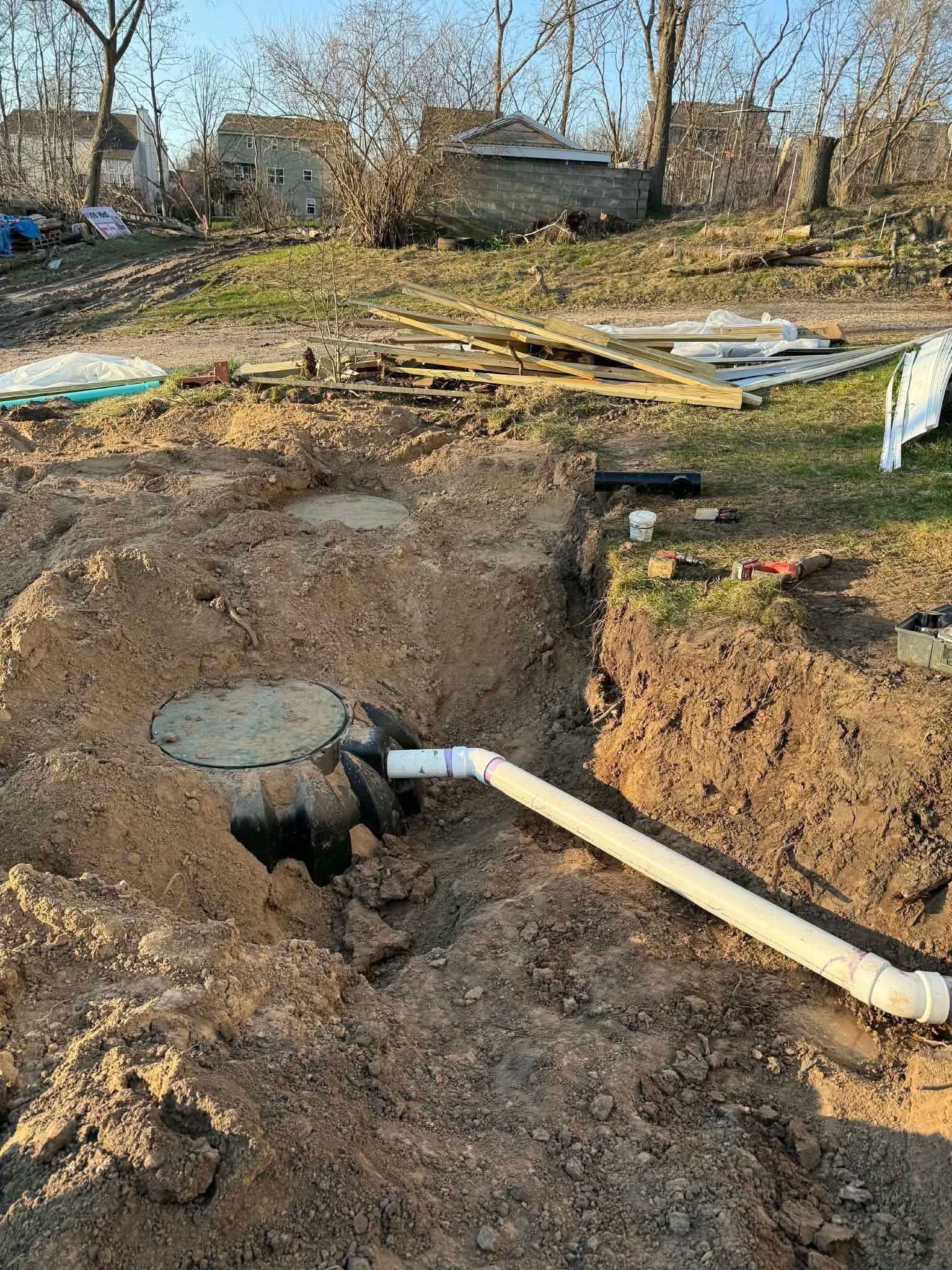
Repair work addresses tanks with cracked walls or damaged inlet and outlet baffles, distribution boxes that have settled or separated from piping, drain field lines crushed by vehicle traffic or root intrusion, and drainage problems caused by surface water infiltration or high groundwater conditions. Fast response times prevent further damage and contain problems before sewage surfaces create health hazards or property damage.
Request an inspection to identify the cause of septic problems and discuss practical repair solutions for your system.
Why Septic Problems Happen and How to Stop Them
Septic failures typically stem from mechanical damage to system components, hydraulic overloading that saturates drain field soils, or maintenance neglect that allows solids to escape the tank and clog distribution lines. Broken inlet baffles let wastewater turbulence stir up settled solids and carry them into the drain field where they plug soil pores and prevent effluent infiltration. Distribution boxes that settle create uneven flow, sending all wastewater to one section of the drain field while other areas remain dry, which overloads part of the system and causes localized surfacing.
After repairs, drains function normally again, odors disappear as the system resumes proper treatment, and standing water over the drain field dries up once distribution problems are corrected and flow is balanced. Addressing issues quickly protects property value by preventing sewage exposure, avoiding expensive emergency service calls, and extending system lifespan without requiring complete replacement.
Repairs include replacing damaged tanks or components, rerouting drain field sections to functional areas, installing additional distribution capacity when needed, and correcting drainage or grading problems that contribute to system stress. Some situations require only targeted component replacement, while others involve partial drain field reconstruction depending on soil conditions and damage extent.
Answers to Frequent Septic Repair Questions
Repair questions focus on diagnosing problems, understanding what can be fixed versus what requires replacement, and preventing recurrence after repairs are complete.
Midwest Septic and Excavating provides septic repair services for both residential and commercial systems experiencing performance problems. Call us to schedule a diagnostic inspection and receive recommendations for restoring your system's function.
What causes septic systems to back up into the house?
Backups occur when the drain field cannot accept more effluent due to soil saturation, clogged distribution lines, or failed components, which causes wastewater to rise in the tank until it backs up through the lowest plumbing fixtures in the home.
How do you determine whether a system needs repair or replacement?
Diagnosis involves inspecting tank condition, testing drain field soil absorption capacity, and evaluating whether problems stem from repairable components like broken baffles and distribution lines or from irreversible drain field failure caused by biomat clogging that cannot be restored.
What does standing water over the drain field indicate?
Standing water or saturated soil above drain field trenches indicates effluent is not infiltrating properly, which happens when soil pores are clogged with solids from an unmaintained tank, when distribution is uneven due to broken components, or when seasonal high water tables limit available soil depth in Coopersville clay soils.
How quickly should septic problems be addressed?
Septic issues should be addressed as soon as symptoms appear because continued use of a failing system worsens drain field damage, increases repair costs, and creates health hazards from sewage exposure on the property surface or in basement backups.
What prevents septic problems from recurring after repairs?
Preventing recurrence requires regular pumping to remove solids before they overflow into the drain field, avoiding excessive water use that overloads soil absorption capacity, and protecting the drain field area from vehicle traffic and deep-rooted plantings that damage distribution lines.