
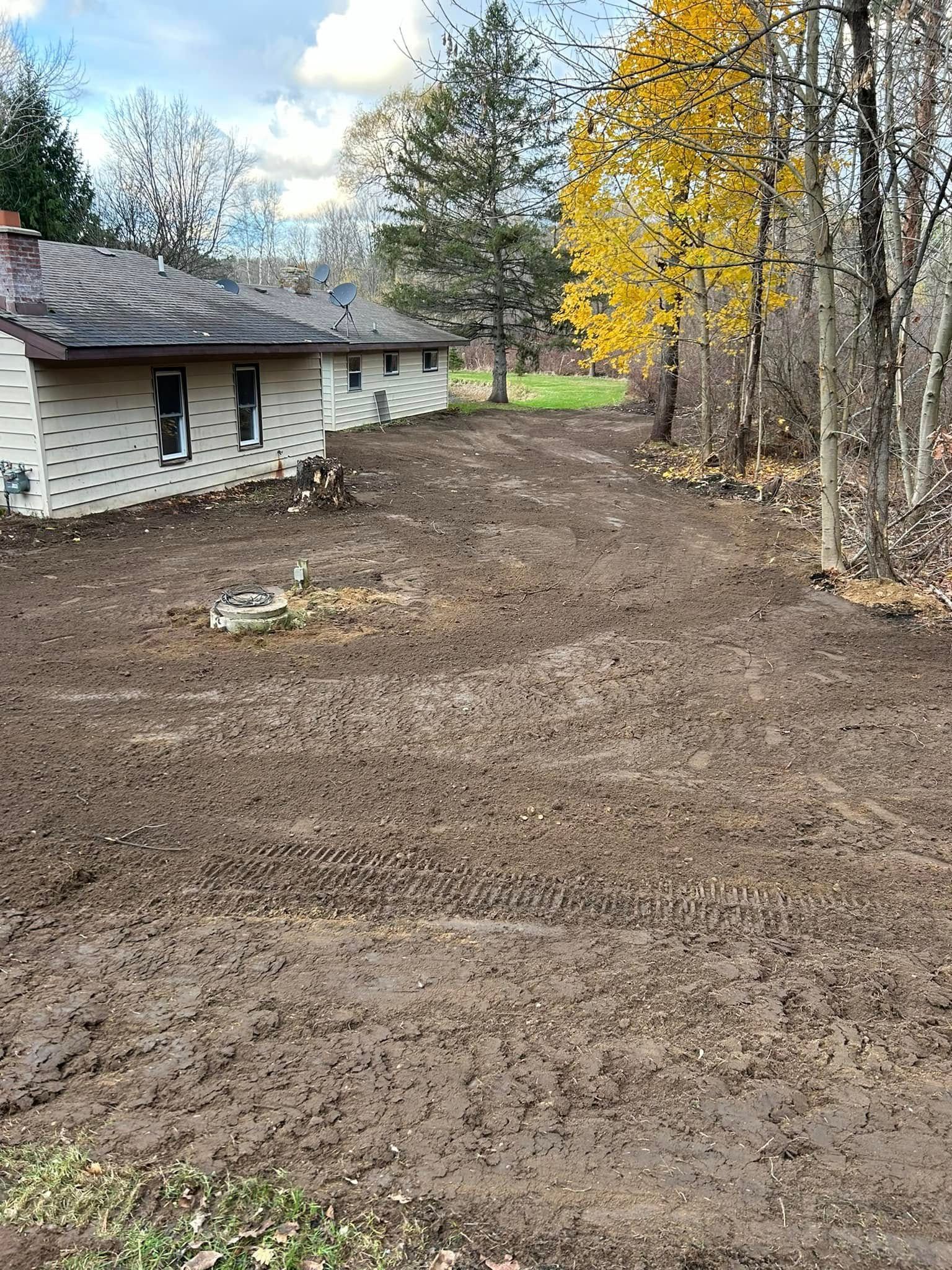
Usable Space From Overgrown Property
Land Clearing in Coopersville and surrounding areas for properties requiring accessible space for homes, buildings, driveways, septic systems, and agricultural use
Overgrown lots, wooded acreage, and properties thick with brush limit what you can build or use the land for until vegetation is removed. Land clearing removes trees, brush, overgrowth, and unwanted vegetation, creating accessible space that supports residential development, agricultural operations, and commercial construction. Midwest Septic and Excavating handles clearing projects across Coopersville, Hudsonville, Allendale, and neighboring communities, working on both small residential lots where a few trees block driveway placement and larger acreage projects where dense vegetation prevents access to buildable areas. Efficient equipment and responsible site management practices mean clearing proceeds quickly while preserving topsoil and minimizing site disturbance in areas you plan to leave untouched.
Clearing involves cutting and removing trees, grinding or removing stumps to allow grading and construction, removing brush and undergrowth that interferes with site access, and managing debris through chipping, hauling, or controlled burning where regulations permit. The process creates defined boundaries between cleared and preserved areas, establishes access routes for construction equipment, and prepares land for grading, excavation, or immediate use.
Schedule a site visit to evaluate vegetation density and discuss clearing options for your property.
How Clearing Improves Accessibility and Development Potential
Removing vegetation exposes the actual ground surface, revealing slopes, drainage patterns, and soil conditions that were hidden under brush and tree cover. This visibility allows accurate planning for building placement, driveway routes, and septic system locations before excavation begins. Stump removal creates continuous cleared areas where grading equipment can operate without obstructions, and it eliminates future settling that occurs when stumps decompose beneath driveways or building pads.
After clearing, you'll see defined open areas ready for construction or agricultural use, clear sight lines that improve property security and accessibility, and space for equipment to maneuver during grading and excavation phases. Driveways can be routed along efficient paths rather than weaving around trees, and septic systems can be placed in optimal soil areas rather than being forced into marginal locations because vegetation blocked better sites. Properties cleared for agricultural use gain usable acreage for pasture, crop production, or equipment storage that was previously inaccessible due to overgrowth.
Experience handling both small lots and larger acreage projects means understanding when selective clearing preserves desirable trees and when complete removal creates the most functional space. Responsible site management includes identifying property boundaries before clearing begins, protecting areas marked for preservation, and managing debris in ways that comply with local regulations and respect neighboring properties.
Common Questions About This Service
Property owners preparing land for development frequently ask about what clearing involves and how quickly projects can be completed.
Midwest Septic and Excavating transforms overgrown properties into accessible, development-ready land using efficient equipment and site management practices that respect your timeline and budget. Request an estimate to discuss your clearing project and explore options for vegetation removal and debris management.
What does land clearing include?
Clearing includes cutting and removing trees, grinding stumps to below-grade depth, removing brush and undergrowth, clearing root systems that interfere with grading, and managing debris through chipping, hauling, or other approved methods. The goal is creating accessible, vegetation-free space ready for the next phase of your project.
How is debris managed after clearing?
Debris options include chipping brush and small trees into mulch that can remain on-site or be hauled away, removing logs and larger material for disposal or firewood, and grinding stumps so wood chips can be spread or removed. The approach depends on project size, debris volume, and how you plan to use the cleared area.
What size projects can be handled?
Equipment capabilities allow efficient clearing of small residential lots where a few trees need removal, multi-acre parcels requiring complete vegetation clearing, and selective clearing projects where certain trees are preserved while others are removed. Site visits determine the best equipment and approach for your specific acreage and vegetation density.
When is the best time to clear land in Coopersville?
Late fall through early spring works well for clearing because frozen or firm ground supports equipment weight without excessive rutting, and visibility through bare branches makes it easier to assess tree conditions and plan removal sequences. Summer clearing is also effective, though wet periods may require waiting for drier soil conditions to avoid site damage.
How does clearing prepare land for construction?
Removing vegetation exposes the ground surface so accurate grading and excavation can proceed, eliminates root systems that would decompose and create voids under structures, and establishes clear access routes for construction equipment. The result is a clean workspace that allows efficient progression through site prep, foundation work, and building construction.