
Systems Designed to Function for Decades
Septic Installation in Coopersville and surrounding areas for new home construction, replacement of outdated systems, or properties converting from holding tanks
Septic systems fail early when tanks are undersized for household wastewater volume, when drain fields are placed in soils with poor percolation rates, or when installation shortcuts result in improper slopes, inadequate stone bedding, or compressed distribution lines. Midwest Septic and Excavating completes septic installations in Coopersville, Caledonia, Allendale, and neighboring communities, from initial planning and soil evaluation through tank placement, drain field construction, and final inspections. System design accounts for household size, soil conditions identified through percolation testing, and local health department requirements that govern tank capacity, drain field size, and setback distances from wells and property lines.
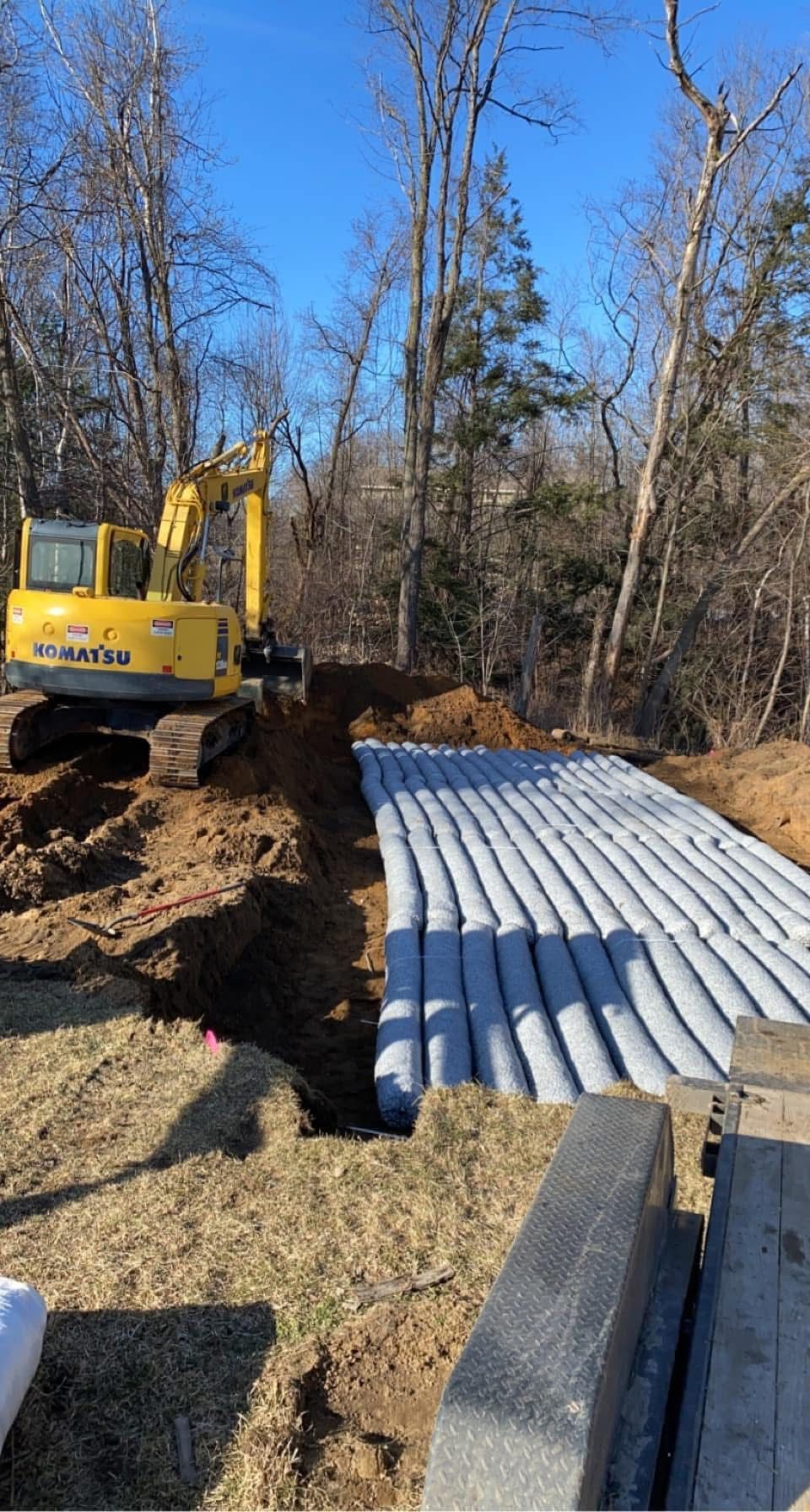
Installation involves excavating to proper depths for tank placement and drain field trenches, setting tanks level to ensure correct inlet and outlet flow, installing distribution boxes that divide effluent evenly across drain field laterals, and placing perforated pipe in gravel beds that allow treated wastewater to infiltrate surrounding soil. Coordination with builders, inspectors, and property owners schedules excavation and installation to align with foundation work, utility rough-ins, and required inspections before backfilling.
Schedule an installation consultation to review soil conditions, system sizing, and site layout options for your property.
What Changes After Professional Installation Completes
Properly installed septic systems handle daily wastewater flows without backups, odors, or surface water appearing over drain fields during wet weather. Tank installation at correct grades ensures solids settle in the tank rather than flowing into the drain field where they clog soil pores and cause premature failure. Drain field trenches placed in suitable soils with adequate separation from seasonal high water tables allow effluent to percolate naturally, which treats wastewater biologically and prevents groundwater contamination or surfacing during spring snow melt common in western Michigan.
After installation, your system operates without requiring constant attention, drains function normally throughout the house, and you avoid the maintenance burden and pumping costs associated with holding tanks. System design for long-term reliability prevents the expensive drain field replacements that result from improper sizing, poor soil matching, or installation errors that compromise treatment capacity.
The service includes complete onsite wastewater systems with septic tanks, drain fields, and all distribution components installed to meet local codes. Projects range from small residential systems for new construction to larger capacity installations for multi-family properties, and replacement systems for homes with failed or inadequate septic infrastructure.
Common Questions About Septic System Installation
Installation questions typically address system design, soil suitability, timelines, and what determines proper septic function after the system is in use.
Midwest Septic and Excavating works with property owners, builders, and inspectors to complete septic installations that meet regulatory requirements and provide long-term wastewater treatment. Contact us to discuss system options, site evaluation, and installation timelines for your new construction or replacement project.
What determines septic system size for a new home?
System size is based on the number of bedrooms, which serves as a proxy for household occupancy and daily wastewater volume, with larger homes requiring bigger tanks and more extensive drain field areas to handle increased flow without overloading soil absorption capacity.
How do soil conditions affect drain field placement?
Soil percolation rates determine how quickly effluent infiltrates and whether the soil provides adequate treatment, with sandy soils draining quickly but offering less filtration, clay soils draining slowly and requiring larger drain field areas, and seasonal water tables limiting usable soil depth.
What happens during the installation process?
Installation includes excavating for the tank and drain field, setting the tank level with proper inlet and outlet alignment, installing distribution boxes and perforated drain lines in gravel-filled trenches, and backfilling carefully to avoid damaging components or compacting soil over the drain field.
How does professional installation prevent future problems?
Proper installation ensures tanks are level so solids settle correctly, drain field trenches are placed at depths that avoid seasonal water tables, and distribution systems divide flow evenly to prevent localized overloading that causes wet spots and premature system failure.
When should septic installation happen during new construction in Coopersville?
Septic installation typically occurs after foundation and rough grading work but before final landscaping, which allows access for excavation equipment, coordination with building inspections, and restoration of disturbed areas once the system is complete and approved.