
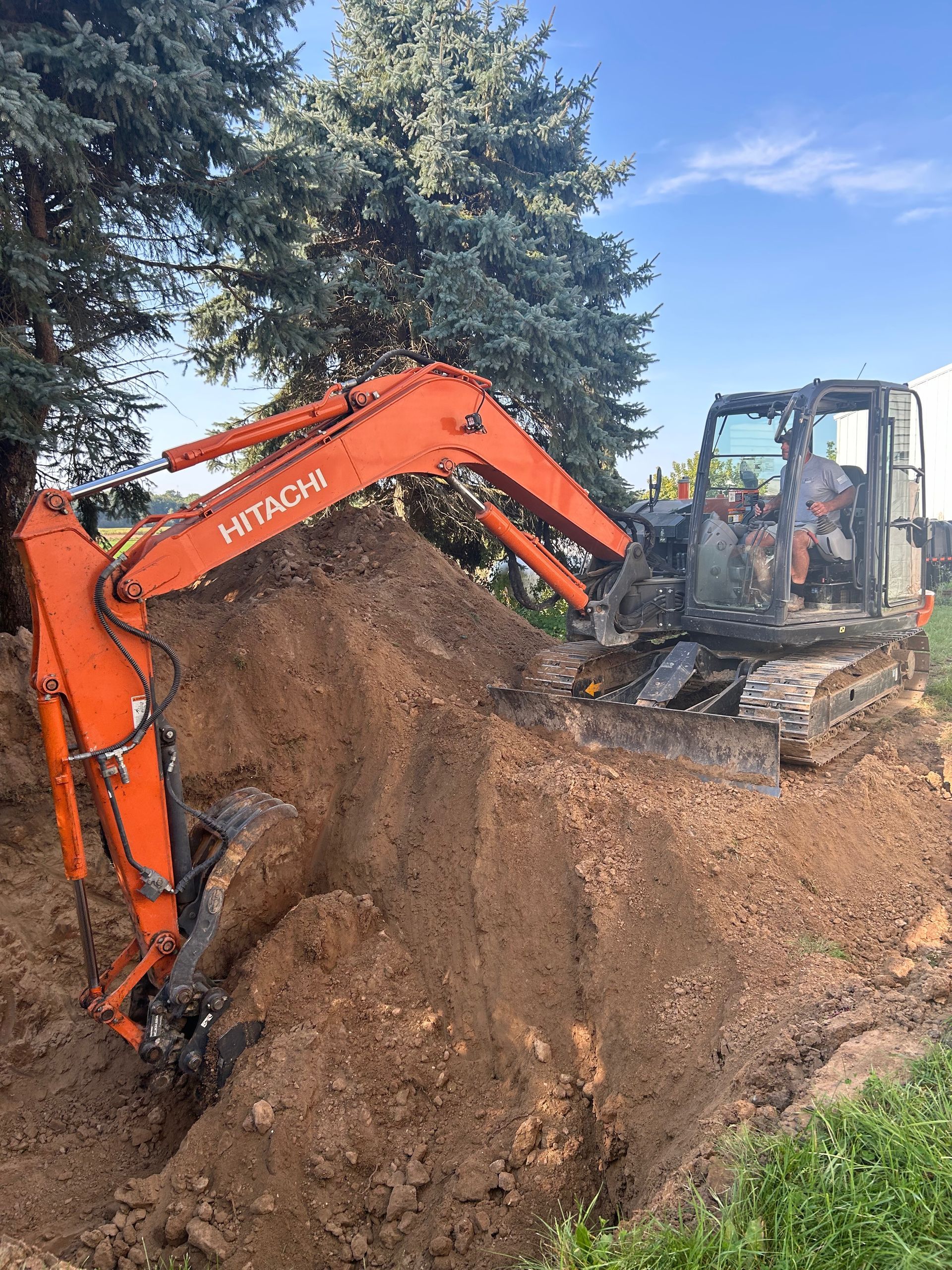
Building on Stable Ground From the Start
Excavation Services in Coopersville and surrounding areas for residential, agricultural, and commercial projects requiring stable foundations
Midwest Septic and Excavating handles excavation work across Coopersville, Allendale, Hudsonville, and the surrounding region, supporting projects that range from new home basements to barn pad construction and commercial site development. Whether you're preparing for a residential foundation, creating a stable driveway base, or grading land for agricultural use, the excavation phase determines how well the finished structure performs over time. Proper depth control, compaction, and drainage consideration during excavation prevent settling, water intrusion, and structural movement that often show up years after construction.
Excavation involves removing soil to precise depths and grades, shaping the ground to support specific loads, and establishing proper drainage paths so water moves away from structures rather than pooling beneath them. The work includes basement excavation that accounts for frost depth and soil bearing capacity, driveway excavation that creates a stable base for aggregate and pavement, and trenching for utilities that maintains proper slope and backfill compaction. Each project requires different equipment capabilities and site management approaches depending on soil type, access constraints, and the intended use of the excavated area.
Request a project consultation to review site conditions and excavation requirements for your upcoming construction.
What Proper Excavation Accomplishes
Accurate excavation creates level building pads that distribute structural weight evenly, trenches that maintain utility line depth and protection, and grading that directs surface water away from foundations and driveways. Equipment capabilities determine how efficiently crews handle varying soil conditions, from sandy loam that excavates quickly to clay that requires different bucket angles and cycle times. Midwest Septic and Excavating operates machinery suited to projects of different sizes, allowing efficient completion whether you're excavating a small residential foundation or clearing and grading several acres for agricultural development.
After excavation, you'll see defined grades that match engineering specifications, compacted subgrades ready to support concrete or aggregate, and drainage paths that prevent water from collecting in unwanted areas. Driveways built on properly excavated bases resist rutting and settling because the subgrade has been compacted to support vehicle loads. Basements excavated to correct dimensions and depths allow foundation walls to be poured at the right elevation, preventing issues with floor height, window placement, and frost heave over the building's lifespan.
Site safety and attention to detail throughout the excavation process mean that slopes remain stable during and after digging, utility lines are located before trenching begins, and excavated material is stockpiled appropriately for backfill or removal. Experience working on both new construction and property improvement projects informs decisions about access routes, staging areas, and sequencing that keep timelines on track and avoid site damage.
What to Know Before Excavation Begins
Projects in this region often involve questions about timing, site access, and how different soil conditions affect the excavation approach.
Midwest Septic and Excavating combines equipment capabilities with site management experience to complete excavation projects efficiently while maintaining the accuracy your construction timeline depends on. Schedule an estimate to discuss your project scope, site conditions, and excavation requirements.
What does excavation include for a residential basement?
Excavation removes soil to the specified depth and footprint, creates level footing trenches, establishes drainage grades around the perimeter, and stockpiles topsoil for later use. The process accounts for frost depth requirements and ensures the excavated area matches foundation plans so concrete forms fit correctly.
How does soil type affect the excavation process?
Sandy soils excavate quickly but require slope management to prevent cave-ins, while clay soils hold slopes better but take longer to dig and may need different equipment settings. Moisture content also affects how soil handles during excavation and compaction, which is why timing relative to recent rainfall matters for project efficiency.
When is the best time to schedule excavation work?
Spring and fall generally offer the most predictable soil conditions in Coopersville, with ground that's neither frozen nor saturated. Summer works well for most projects, though extended dry periods can make compaction more challenging. Winter excavation is possible for urgent projects but requires additional planning around frost depth and equipment operation.
What site access do excavation crews need?
Equipment requires clear paths wide enough for tracked machines and dump trucks, stable enough to support heavy loads without rutting, and free of overhead obstructions like low-hanging utility lines. Site visits identify access constraints and determine whether temporary access roads or alternate entry points are needed before work begins.
How is grading accuracy maintained during excavation?
Laser levels and grade stakes guide operators to precise depths and slopes, ensuring that finished grades match engineering plans. Regular checks throughout the excavation process catch deviations early, preventing costly rework and ensuring that structures built on the excavated area perform as designed.